When Is the Best Time to Hike Le Morne Brabant? A Practical Seasonal Guide
The cooler, generally drier months from May to October often provide the most comfortable window for hiking Le Morne Brabant. This guide compares the seasons, start…
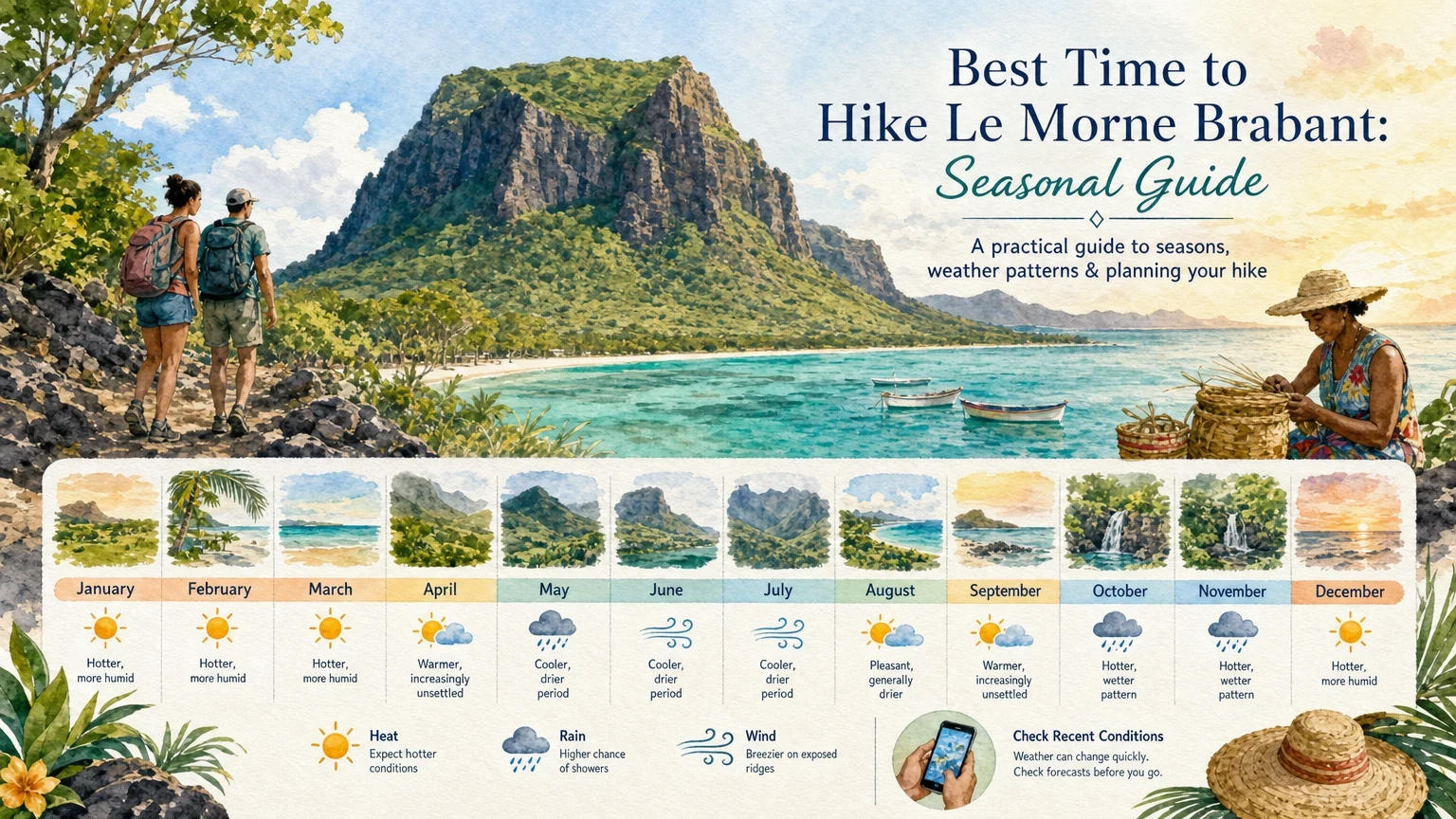
Month-by-month seasonal planning guide for hiking Le Morne Brabant
The short answer is that May to October is often the most comfortable period for hiking Le Morne Brabant. These months fall within Mauritius’s cooler, generally drier season, so planning around heat and rain can be easier. That does not mean every day will be ideal, and it does not make the warmer months off-limits.
On this exposed mountain, the date on your calendar is only the starting point. Recent rain, wind, cloud, heat and current access information can matter more than a forecast checked several weeks ahead. The best plan is to choose a sensible seasonal window, start early and make the final decision close to the day.
Good to know
FAQ
Which month usually offers the most comfortable conditions for hiking Le Morne Brabant?
There is no single guaranteed best month. The period from May to October is generally cooler and drier, so it is often the most comfortable seasonal window. Your final choice should still depend on recent rain, wind, heat, current access information and the ability of your group.
How much flexibility should I leave in my itinerary for a Le Morne hike?
If the hike is important to you, schedule it during the first half of your stay and keep at least one possible backup day. This gives you room to respond to unsuitable conditions without squeezing the hike into your departure day or overloading the rest of the trip.
Is Le Morne Brabant suitable for children or groups with mixed fitness levels?
That depends on the children’s experience, the route being considered, the conditions and the comfort of the least confident person. Ask the provider about terrain, steep sections, expected pace and possible turnaround points. A shorter plan or a different hike may suit some families better.
The short answer: when should you hike Le Morne Brabant?
For many visitors, the best time to hike Le Morne Brabant is between May and October, with an early-morning start. The cooler seasonal pattern can make the climb more comfortable, particularly on exposed sections where there is limited relief from the sun.
If your Mauritius trip falls between November and April, you do not necessarily need to remove Le Morne from your plans. Leave room to change the day, avoid committing to the hike immediately after substantial rain, and pay close attention to heat and wind. A flexible itinerary is more useful than trying to identify one supposedly perfect month.
Le Morne hiking seasons at a glance
May to October is generally the cooler and drier part of the year. It is often the easiest seasonal window for travellers who want to reduce their exposure to intense heat and unsettled weather. Wind can still become an important factor, especially higher on the mountain.
November to April is typically hotter, wetter and more changeable. Hiking may still be possible, but an early start, a flexible date and a careful check of recent conditions become more important. Long-range climate patterns cannot tell you whether the trail will be suitable on a particular morning.
AI-generated editorial illustration for Andeor.
May to October: cooler conditions and easier planning
The cooler season is usually the first choice for travellers building a Mauritius itinerary around hiking. Lower seasonal heat can make a sustained climb feel more manageable, although personal fitness, trail conditions and pace still matter.
Do not read “drier” as “always dry.” A shower before your hike can affect the ground even if the morning itself looks bright. Wind also deserves attention. A pleasant breeze near the coast may feel quite different on exposed upper terrain, so check a detailed local forecast rather than looking only at a general island weather symbol.
November to April: hotter, wetter and more changeable
During the warmer season, heat can become the main planning issue. Starting early limits how much of the ascent takes place later in the day, but it does not replace carrying enough water, using sun protection and choosing a pace that works for the whole group.
Rain can also be more disruptive during this period. What matters is not only whether rain is predicted while you are walking, but what has fallen beforehand. If the ground is wet or the forecast is unsettled, ask the relevant guide or local operator about current conditions and be willing to use your backup plan.
Are the transition months a good compromise?
May and October can appeal to travellers looking for a middle ground between the main seasonal patterns. May moves towards the cooler period, while October sits near the return of warmer conditions. They can work well, but the same rule applies: the conditions close to your chosen date matter more than the month’s reputation.
If Le Morne is a priority, place the hike in the first half of your stay rather than on your final morning. That gives you another opportunity if rain, wind, access information or the group’s energy level makes the original date a poor fit.
Month-by-month planning guide
January: Expect warmer, wetter and more changeable planning conditions. Keep the date flexible and favour an early start.
February: Use heat, recent rain and the short-term forecast as key planning points rather than relying on a fixed plan.
March: Warm conditions may still shape the day. Check how much rain has fallen before deciding whether to proceed.
April: Conditions begin moving towards the cooler part of the year, but day-to-day variation still calls for a current check.
May: This transition into the cooler, generally drier season can be a practical hiking window.
June: Cooler seasonal conditions often make planning easier, although rain and wind still need attention.
July: The cooler pattern may suit active days, but check wind on exposed parts of the route.
August: Similar cooler-season planning applies. Do not assume a clear coastal morning means calm conditions higher up.
September: This is still within the generally cooler and drier period, making it a useful month to consider.
October: Often a reasonable transition-month option, with increasing attention needed as warmer conditions return.
November: Plan for greater heat and changeability. Start early and leave space to move the hike to another day.
December: A flexible plan is important as hotter and wetter seasonal conditions become more relevant.
The best time of day to begin
An early-morning start is usually the sensible choice in any season. It can reduce the amount of climbing done during the hotter part of the day and leave more time to move at a steady pace. It may also make the rest of your day easier to organise, rather than turning lunch into a distant rumour.
Your exact start time should follow current access arrangements, daylight, weather and any instructions from your guide or operator. Confirm meeting details before travelling to the trail, particularly if you are driving from another part of Mauritius.
How rain, wind and heat change the hike
Recent rain
Rain can leave sections of the route wet even after the sky clears. Check recent rainfall, not only the forecast for your start time. If you are unsure about the ground, ask someone with current local knowledge rather than guessing from a distant weather app.
Wind
Le Morne’s coastal position means wind should be part of your final check. Look for information relevant to the mountain and exposed terrain, not simply a general forecast for your hotel area. If you are going with a guide, ask how the expected wind affects the planned route.
Heat
Heat affects people differently, and a mixed group should plan around its least heat-tolerant member. Begin early, carry suitable water and sun protection, and avoid treating the summit as an obligation. Turning around can be the right decision if the conditions or the group’s energy are not as expected.
A 48-hour conditions checklist
Use this checklist two days before the hike, then repeat the important checks on the evening before and the morning itself.
1. Check the local forecast for rain, temperature, cloud and wind. 2. Look at recent rainfall, not only what is predicted next. 3. Confirm current access information and any instructions from your guide or operator. 4. Check your planned start time and travel time to the meeting point. 5. Make sure everyone has suitable footwear, water and sun protection. 6. Ask whether every member of the group is comfortable with the expected terrain and pace. 7. Agree on a backup day or alternative activity before you need it.
If the information is unclear or conditions appear marginal, seek current local advice. A saved itinerary is not more important than making a sensible decision on the day.
Should you book a guide for Le Morne?
A guided experience can be useful if you are unfamiliar with the mountain, concerned about steep or exposed terrain, travelling with a mixed-ability group, or simply prefer local support. A guide can also explain the planned pace and help you understand how current conditions affect that particular outing.
Before booking, ask which part of the route is planned, what fitness and terrain experience are expected, how weather decisions are made, what equipment you need and what happens if conditions change. Read the actual listing carefully because routes, meeting arrangements and requirements may differ between providers.
Keep a realistic backup plan
A changed hiking day does not have to become a lost day. Keep one lower-effort or less exposed activity in mind and avoid packing another demanding experience immediately after Le Morne. That gives you room to move the hike without making the rest of the trip feel like a complicated puzzle.
The most reliable approach is simple: aim for the cooler season if your dates are flexible, start early, check recent conditions and leave enough space in your itinerary to change course. Le Morne will still be there tomorrow; your knees may appreciate the patience.
Andeor Editions
Find the right experience
Explore current Andeor marketplace experiences, compare the practical details and choose an active day that fits your group and travel dates.