What vaccinations do you need for Mauritius?
A clear guide for UK travellers to recommended vaccinations, yellow fever certificates, malaria and mosquito protection before a holiday in Mauritius.

For a trip directly from the UK, Mauritius does not impose a blanket travel-vaccination requirement. A yellow fever certificate can be required because of countries you have visited or travelled from. For health protection, keep routine vaccinations up to date and have hepatitis A, hepatitis B and typhoid assessed according to your personal risk. The Mauritian entry guidance and UK country guidance address these different questions.
Our advice is to prepare around your actual itinerary. A week beside the lagoon, a longer visit with family and a holiday combined with mainland Africa should not be reduced to the same checklist. Below, we explain what to organise before you fly and what to keep in your day bag once you arrive.
Do you need a yellow fever certificate?
Mauritius has no local yellow fever risk, but it can require proof of vaccination from travellers arriving from countries on its own designated list. That list is not identical to every international risk map. Use the Mauritius health authority’s list when checking your route, particularly if your holiday includes another country before Mauritius.
For a direct UK-to-Mauritius journey without relevant prior travel, this certificate requirement does not normally apply. If you have a stopover or have recently visited another country, give the travel clinic your complete flight route and dates. A British passport alone does not settle the certificate question. Avoid applying a generic transit rule without checking the Mauritian requirement.
Where a first yellow fever vaccination is required, the certificate becomes valid 10 days after vaccination. Include that interval in your departure planning. This is a certificate rule, not a reason for everyone going to Mauritius to book that vaccine. Mauritian health advice explains the requirement.
Which vaccinations should UK travellers discuss?
Start with your routine UK vaccinations. NaTHNaC’s Mauritius recommendations identify routine protection, including MMR and diphtheria, tetanus and polio, as the foundation. Whether you need a booster depends on your existing record and circumstances.
Hepatitis A, hepatitis B and typhoid
Hepatitis A and typhoid vaccination are assessed against risks including food and water hygiene and the way you will travel. Hepatitis B vaccination can be considered for travellers, with particular attention to longer stays, potential blood or sexual exposure and medical circumstances. Each vaccine has its own indications. TravelHealthPro explains who should consider each one.
Describe the holiday you have booked, not simply “Mauritius”. Bring the length of stay, other destinations, accommodation plans and any activities already chosen. Keep the itinerary in one note alongside your vaccination history. This gives the clinician something concrete to assess and helps you leave with a clear record of what is needed and why.
Malaria, dengue and chikungunya
Mauritius is a WHO-certified malaria-free country. The UK’s malaria-prevention recommendations do not advise routine malaria tablets for Mauritius alone. A stop in a malaria-risk destination elsewhere requires its own advice; the Mauritius recommendation does not cover a separate safari or another country on your route.
Mosquito protection still matters. Dengue and chikungunya occur in Mauritius, and the mosquitoes that transmit them can bite during the day. The FCDO health page identifies both risks. An evening-only repellent routine therefore misses part of the picture.
At our check on 2 November 2026, the CDC’s Mauritius chikungunya notice was marked removed, with a page review date of 5 October 2026. This does not mean chikungunya risk has disappeared. Discuss current conditions at your pre-travel appointment, especially if you are pregnant or have a relevant health condition. Seek medical advice promptly if fever or joint pain develops during or after your trip, and mention where you travelled.
Discuss dengue and chikungunya vaccination with a travel-health clinician. Suitability depends on exposure, outbreak conditions, personal risk and relevant medical history. UK country guidance explains the current recommendations.
When to arrange your travel-health appointment
Begin checking the health requirements about eight weeks before departure, as the FCDO recommends. The NHS advises a travel-vaccination appointment ideally four to six weeks before travel where possible, since some courses require more than one visit. Contact your GP practice to see which travel services it offers, or use a travel clinic.
If you are leaving sooner, still seek advice now. Take your vaccine record, medicines list and full route, and mention pregnancy, a weakened immune system or any relevant medical condition. The clinician can assess what is useful and feasible within the time available. Do not assume a last-minute booking makes the appointment pointless.
A practical mosquito routine for your holiday
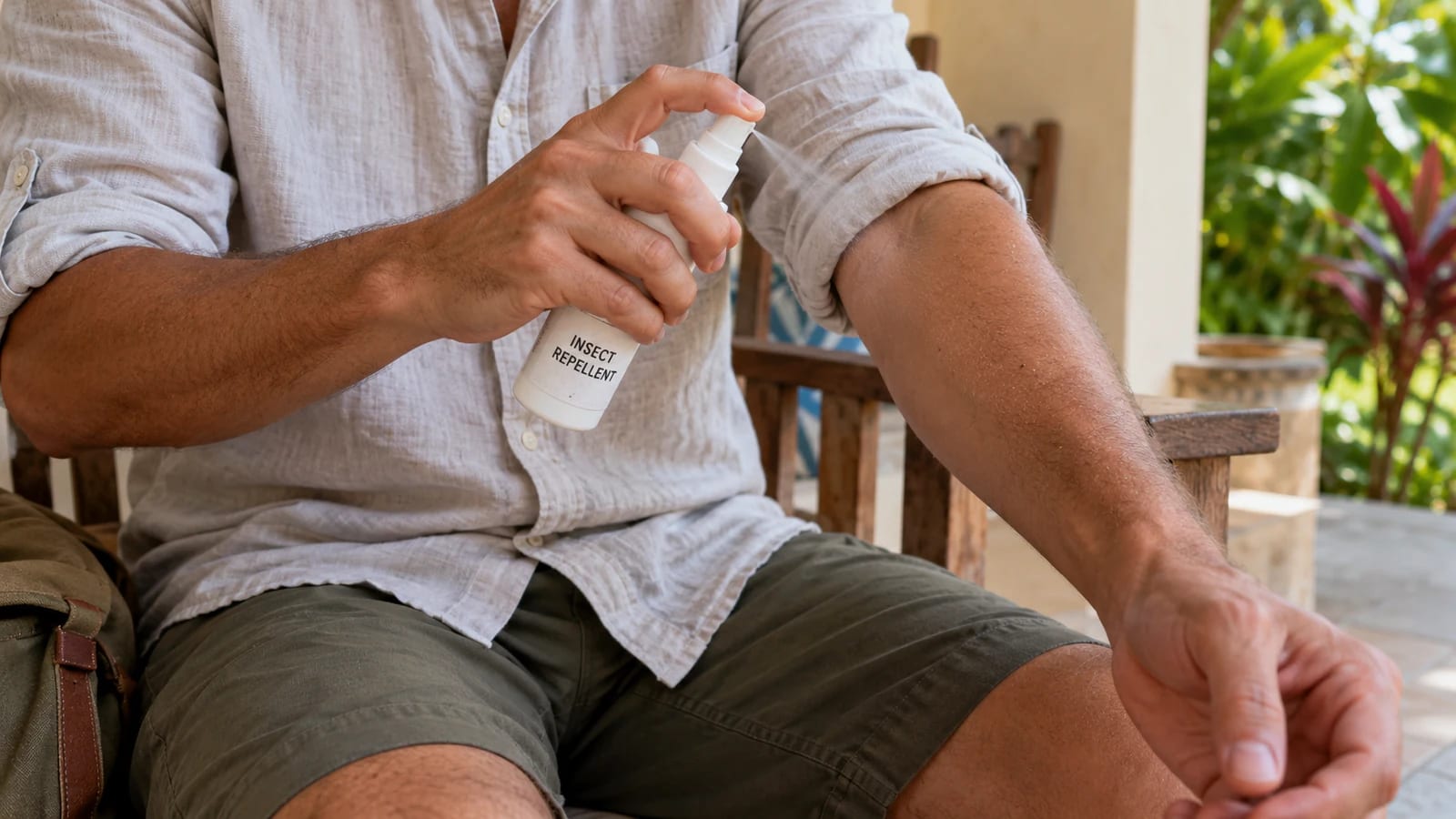
Pack an effective repellent and follow its label. Use loose clothing that covers more skin when practical, and make use of screened or air-conditioned rooms. Put sunscreen on before repellent. Choose products suitable for each traveller’s age and circumstances, particularly for children or during pregnancy, with a pharmacist’s advice. These measures follow NaTHNaC’s bite-avoidance guidance.
Make the routine easy to follow. Keep repellent with your sunscreen in the bag you take to the beach, on a boat or on an inland excursion. Check the product’s reapplication instructions after swimming or heavy sweating. If your morning starts with a hotel pickup, pack that bag the night before rather than leaving everything in a suitcase.
Your final preparation before flying
Check that your insurance covers medical treatment and any evacuation you might need, and keep its assistance number accessible. Carry your regular medicines with the relevant prescription documents; some controlled medicines need additional permission. For urgent medical help in Mauritius, the FCDO lists ambulance numbers 114 and 999.
Keep entry paperwork separate from your medical preparation. The official All-in-One travel form is an arrival form, not a vaccination certificate. The FCDO entry page explains completing it before travel and carrying a printed copy with its QR code. Recheck entry rules close to departure, especially for a journey involving several countries.
Andeor can arrange your hotel and activity transfers through Seke. Share your hotel, dates and chosen experiences with us so we can organise the transport around your plans. You can also explore Mauritius experiences while putting together the itinerary for your pre-travel appointment.
About this guide
Information checked on 2 November 2026. This guide is written by Andeor’s travel editorial team using the official sources linked beside the advice. It is designed for people travelling from the UK. Personal vaccine recommendations should be made by a qualified travel-health professional who knows your medical history and complete itinerary.
Andeor Editions
Let Andeor arrange your hotel transfers
Share your hotel, dates and chosen activities with our team. We can coordinate the journeys through Seke.