
The island, a little closer
The endemic birds of Mauritius
Nine remarkable birds. Their shapes, their songs, and the forests they call home. An invitation to look a little closer.
Meet the birds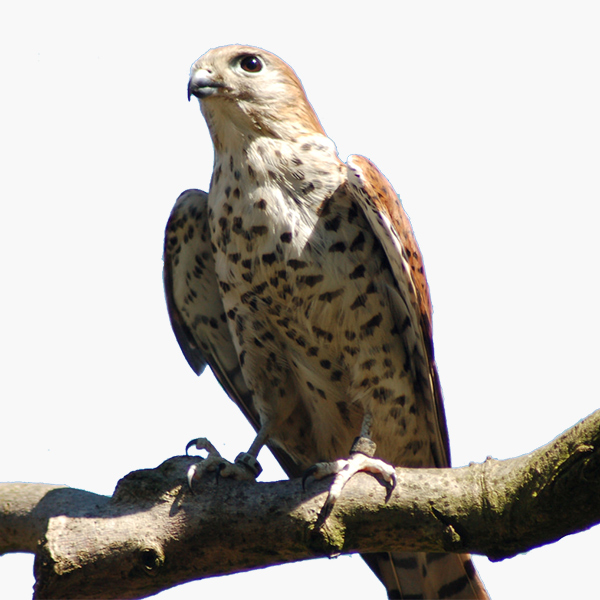
Begin by listening
A different way to know Mauritius.
Beyond the lagoon, another island waits in the trees. A quick movement in the canopy. A call from somewhere out of sight. A bird that belongs to this place and nowhere else.
This guide brings together nine birds traditionally included in Mauritius’s endemic bird guides, with photographs, calls and the details that help you recognise them. Take your time with each one before taking the guide into the forest.
A note on the nine birds
This guide covers the nine birds traditionally presented in Mauritian endemic bird guides. Sources that treat the paradise flycatcher as the Mauritian subspecies of the Mascarene Paradise Flycatcher count eight endemic species and one endemic form. Taxonomic treatments can differ.
The species collection
First the shape.
Then the sound.
Look for the broad silhouette and habitat. Let a distinctive field mark, or a familiar call, bring the picture into focus.
Listen here before your walk. In the wild, keep recordings off and let the birds call naturally.
Mauritius endemic
Mauritius Kestrel
Falco punctatus
A small falcon of forest edges, with warm brown wings and a finely spotted chest. The Mauritius Kestrel is the island’s national bird. Just four known wild individuals remained in 1974; its survival reflects decades of careful conservation.
- Look around
- Forest edges
- Look for
- Warm brown wings and a finely spotted chest
Mauritius endemic
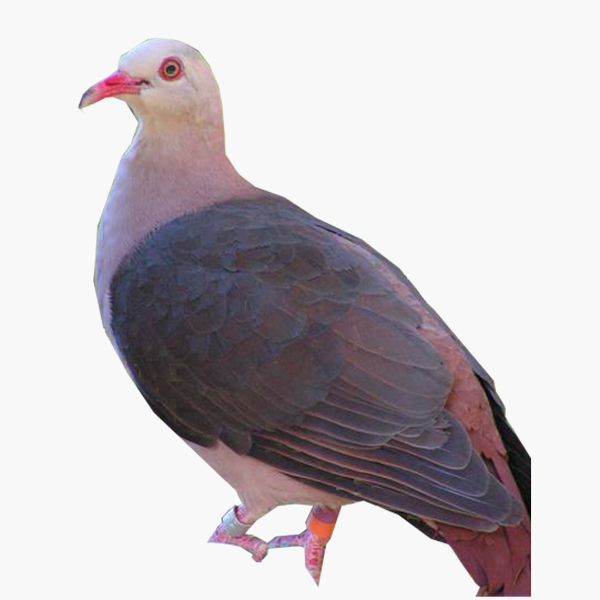
Pink Pigeon
Nesoenas mayeri
A large forest pigeon with muted pink plumage. Captive breeding, releases and long-term habitat work brought it back from the brink of extinction. Black River Gorges remains one of the places where visitors may encounter it.
- Look around
- Native forest
- Look for
- Soft pink head and body with darker wings
Mauritius endemic
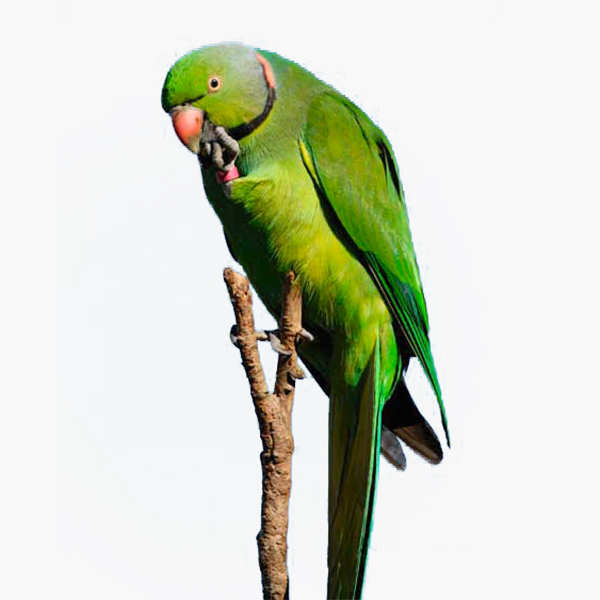
Echo Parakeet
Psittacula eques
Look for deep green plumage among mature native trees. The Echo Parakeet nests in tree cavities and can be confused with the introduced Ring-necked Parakeet. Fewer than 20 remained by the 1980s. Long-term conservation has helped it recover.
- Look around
- Mature native trees
- Look for
- Emerald body and a long, tapered tail
Mauritius endemic · Cardinal
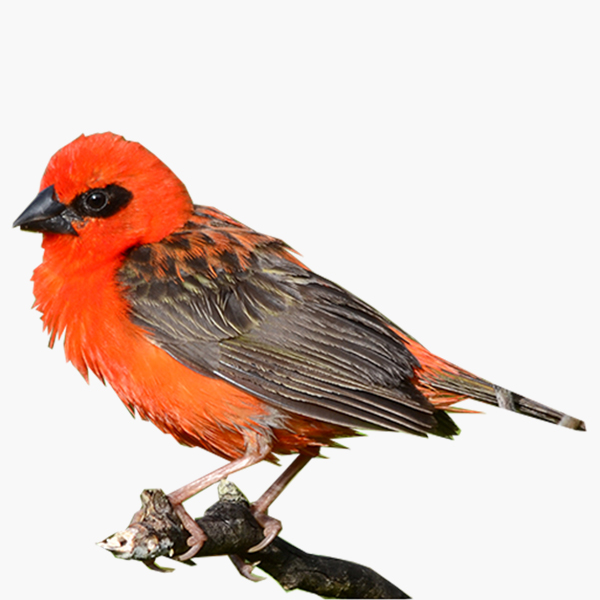
Mauritius Fody
Foudia rubra
A compact forest bird that feeds on insects, nectar and fruit. The male's brilliant breeding plumage explains its local name, cardinal. Outside the breeding season, both sexes are more subdued and can be easy to pass over.
- Look around
- Upland native forest
- Look for
- Breeding males have a vivid red head and chest
Mauritius endemic
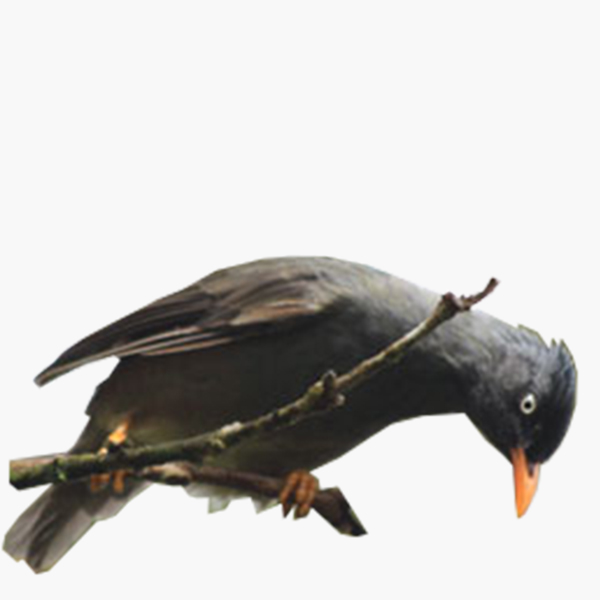
Mauritius Bulbul
Hypsipetes olivaceus
A bold forest bird with a distinctive orange bill. Mauritius Bulbuls often move in pairs and make their presence known vocally as they feed and defend a patch of forest.
- Look around
- Native forest
- Look for
- Black crest, grey body and a bright orange bill
Mauritius endemic
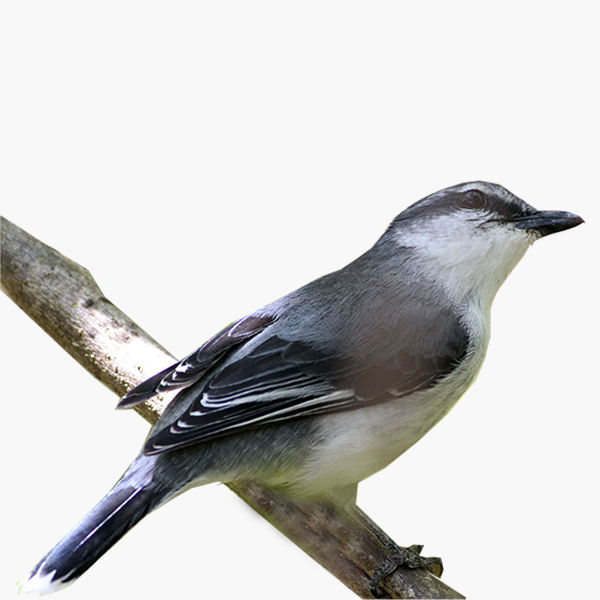
Mauritius Cuckooshrike
Lalage typica
A discreet canopy bird that is often detected by sound before it is seen. The male is ash grey while the female carries warmer rufous tones, so the two can look surprisingly different.
- Look around
- Forest canopy
- Look for
- Ash-grey male and warm rufous female
Mauritius endemic · Pic pic
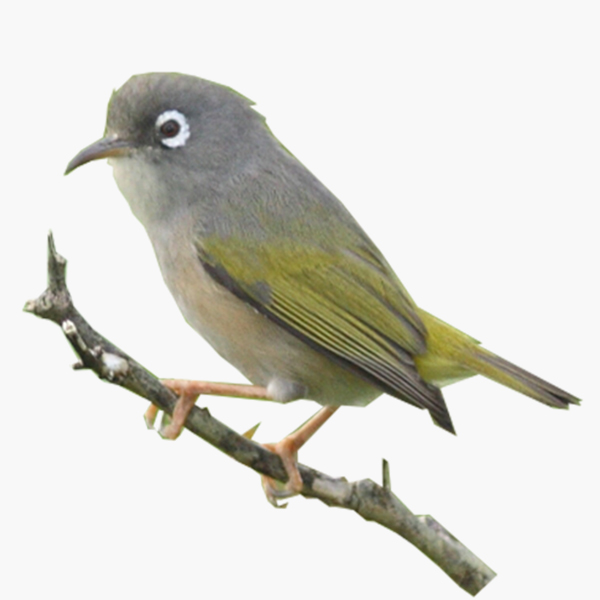
Mauritius Grey White-eye
Zosterops mauritianus
Small groups move quickly through gardens and forest edges. Listen for the busy contact calls, then watch for a tiny grey bird working through foliage. It is more widely encountered than the Olive White-eye, whose conspicuous white eye ring is a useful distinction.
- Look around
- Gardens and forest edges
- Look for
- Grey body, fine bill and pale underparts
Mauritius endemic
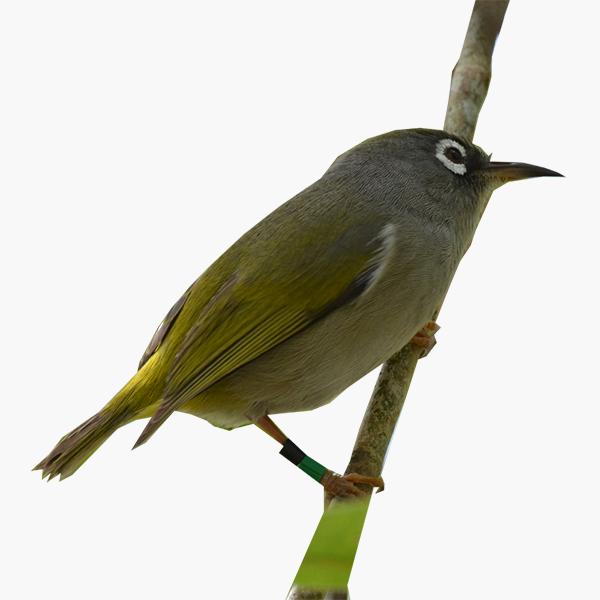
Mauritius Olive White-eye
Zosterops chloronothos
One of Mauritius's rarest birds. It feeds heavily on nectar and survives in a limited range of native habitat. A sighting should be treated as a privilege, never as an expectation.
- Look around
- Remnant native forest
- Look for
- Olive-green body and a crisp white eye ring
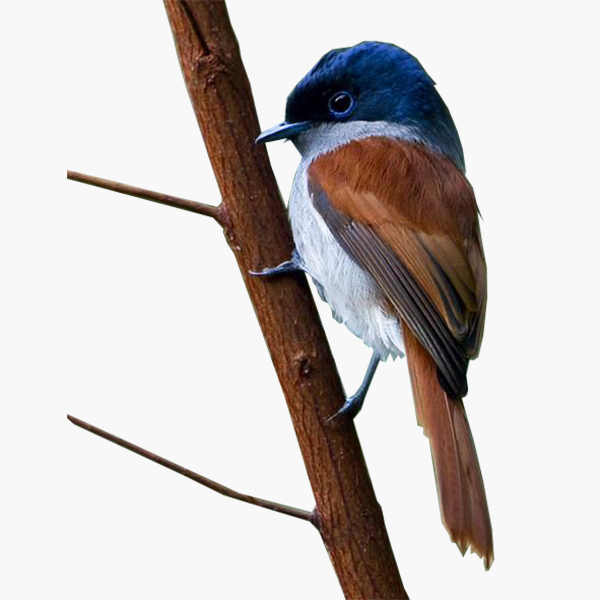
Mauritian endemic form · Coq des bois
Mascarene Paradise Flycatcher
Terpsiphone bourbonnensis desolata
An agile insect hunter of shaded forest, known locally as coq des bois. Mauritian conservation references also list it as Terpsiphone bourbonnensis desolata, the Mauritian form of the Mascarene Paradise Flycatcher. Taxonomic treatments differ, so the name in another field guide may vary.
- Look around
- Shaded riverside forest
- Look for
- Chestnut wings and a dark head
A sense of place
Find the habitat.
Leave room for chance.
Five places to begin, from upland forest to a restored coastal island. These are visitor areas near known habitat, never a promise of a sighting.
Habitat areas, not live sightings. Exact nesting locations are intentionally not shown.
5 habitat areas shown.
Plan your morning
Go slowly.
Notice more.
Good birdwatching is less about the distance you cover than the attention you give to one small patch of forest.
Begin early
Give yourself an unhurried morning. For a guided visit, confirm the meeting time and access arrangements on the experience page.
Listen before looking
Practise with the recordings at home. Once you are in the forest, pause and let natural calls tell you where to look.
Hold one position
Stand quietly at an opening. Scan branches and the canopy before moving on. Keep your distance and never follow a bird towards a nest.
Pack for the forest
Bring binoculars if you have them, comfortable walking shoes, water and a light rain layer. Leave calls, feeding and flash photography out of the encounter.
A recovery story
Still here,
because people stayed.
Habitat loss and introduced predators pushed several Mauritian birds towards extinction. The National Parks and Conservation Service, the Mauritian Wildlife Foundation and their partners have spent decades changing that story.
Captive breeding, careful releases, nest support, predator control and native forest restoration all play a part. Recovery remains an ongoing commitment.
known wild Mauritius Kestrels remained in 1974.
Read the conservation storyTake the guide outside
A morning in the forest.
A closer connection to the island.
A local guide can help you find your bearings, recognise a call and understand the conservation work behind what you see. Explore the birdwatching experience on Andeor for the current itinerary and departures.
Explore the birdwatching walkEvery encounter is with a wild bird. Species and sightings are never guaranteed.
Before you head out
A few useful answers.
How many endemic birds are there in Mauritius?
This guide covers the nine birds traditionally presented in Mauritian endemic bird guides. Sources that treat the paradise flycatcher as the Mauritian subspecies of the Mascarene Paradise Flycatcher count eight endemic species and one endemic form. Taxonomic treatments can differ.
Where is the best place to see endemic birds in Mauritius?
The native forest of Black River Gorges National Park is the main stronghold for several species. Pétrin and the Macchabée trail are useful starting points, but sightings vary with weather, season, time of day and chance.
Can I hear the bird calls before visiting?
Yes. Every species profile in this guide includes a field recording. Listen with headphones, then use the calls as recognition practice rather than playing them back loudly in the forest.
Are endemic bird sightings guaranteed on a guided walk?
No. These are wild birds in natural habitat, so no individual species or number of sightings can be guaranteed. A local guide can improve identification and help visitors move through the habitat responsibly.